Home Hemodialysis (HHD)
Hemodialysis (HD) is a therapy option that filters your blood outside your body using a dialysis machine. When it is performed at home, it is called HHD.
What is HHD?
HD is a type of dialysis that filters your blood outside your body using a machine equipped with a dialyzer, which is a manufactured filter that acts like an artificial kidney.
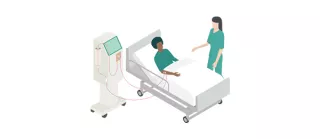
During HD, the dialysis machine removes a small amount of blood from your body through a needle or catheter. The dialyzer then cleans your blood, removing waste, toxins and excess fluid. Your clean blood is then returned to your body.
When HD is performed at home, it is called HHD. Ideally, HHD is performed with the assistance of a caregiver, giving you the flexibility to adjust your treatment schedule around your daily activities and the time to carry on a normal life.

HHD can give you more freedom
Compared to having dialysis in a clinic or hospital, HHD gives you more flexibility to plan treatments around the activities you know and love. You may even be able to travel while on HHD. You should speak with your clinician before planning activities and trips, as they can give you more information on how to stay safe and healthy while pursuing a full and active life.
Compared to in-center hemodialysis (ICHD), you may save the time you would have spent on transportation to the hospital or clinic and enjoy the convenience and comfort of your own space while completing therapy. With an on-call nurse available to help you if needed, you can feel comfortable performing HHD.
Despite these benefits, home HHD does have some special considerations, and you should keep these in mind when discussing with your clinician whether HHD is right for you.
For one, you will need space in your house for an HD machine, along with your regular dialysis supplies. You might need to have adjustments made to your plumbing and electrical systems to accommodate the amount of water the dialysis machine uses during treatment. Further, each time you do dialysis, two needles will need to be inserted, either by you or your caregiver. You should talk to your clinician about how to prepare yourself, mentally and physically, for this process.
Because of these and other special considerations, the training for HHD is longer than the training for peritoneal dialysis (PD) – usually lasting about 4-6 weeks.
In terms of how the therapy feels, you should expect to feel some mild pain during the needle insertion phase, and you may feel tired or experience uncomfortable leg cramps or nausea after therapy. The therapy itself should not be painful.
Preparing your body for HHD
Before you begin HHD, you will need to complete the 4-6 weeks of training required to perform treatment safely and successfully. You will typically also need a caregiver helping you with your home HHD treatments, so he or she will also need to be trained.
Before treatments start, you will need to have a surgical procedure that creates an HD access site under your skin. There are three different types of HD access: fistula, graft and HD catheter. Each has its own benefits and drawbacks, and you should discuss these with your healthcare team in order to determine which will be the safest and most effective access option for you. Typically, a fistula is considered the standard of care in most dialysis centers.
Depending on the strength of your veins and your overall health, your clinician will be able to decide what type of access option is best suited for you. If your clinician decides that you need a dialysis fistula or graft, they will need to schedule the surgery in advance of your dialysis start date.
No matter which kind of access type you choose, you’ll have to protect your access site from excess pressure, germs and infection. Remember to clean your hands before touching your access site and consistently check it for signs of swelling and irritation. If you suspect these issues, contact your nurse immediately. This is true for all dialysis treatment options.
Fistula
- A fistula is often the best choice for HD because it uses your own blood vessels, allowing for good blood flow during therapy, and has the lowest chance of infection.
- Your surgeon will connect one of your arteries to a vein under the skin of your upper or lower arm.
- This surgery should be done at least 2-3 months in advance of your dialysis start date.
- During dialysis, unfiltered blood will flow from your blood vessels through one needle, connected to your fistula, and clean blood will flow back into your body through a second needle, also connected to your fistula.
Graft
- To create a graft, your surgeon will use a piece of medical tubing to connect one of your arteries to one of your veins. This graft will be placed under the skin either on your arm or your leg.
- During dialysis, unfiltered blood will flow from your blood vessels through one needle, connected to your graft, and clean blood will flow back into your body through a second needle, also connected to your graft.
Catheter
- Catheters are usually temporary and are only used while you’re waiting to receive a dialysis fistula or a graft.
- A catheter will be placed inside a vein, either in your neck or your chest. The other end of the tube will exit your skin and be attached to the dialysis machine tubing.
- Catheters are not recommended for long-term use because they can put you at higher risk of blood clotting and infection and provide a slower blood-flow rate.

Benefits of HHD
HHD may be the right treatment option for you if it is well-suited to your medical and physical condition, and lifestyle choices. HHD gives you the opportunity to enjoy the comfort and freedom that comes with performing dialysis in a space that feels familiar and safe, while having telephone access to professional help if you need it. Doing your treatments at home may also increase your flexibility by allowing you to avoid frequent trips to the hospital or clinic.
You will have some control over your treatment, choosing a schedule that fits your social and professional life. If your clinician prescribes it, you may be allowed to do dialysis more frequently and for longer periods of time than you can in-center. If you can, having longer, slower treatments more often may be gentler on your body because it more closely mimics your natural kidney function, which works 24 hours per day. This may decrease negative side effects and help you feel better and more energized, and even provide you more dietary freedom.
In addition to the benefits of HHD, you should be aware of some of the special considerations of this treatment, such as:
- Needles must be inserted during each treatment, which may be uncomfortable for you if you are afraid of needles.
- Almost all HHD patients require the help of a caregiver.
- Your treatments will be performed away from your healthcare team.
- You will need to store up to 6 weeks' worth of dialysis equipment and supplies in your home.
All benefits and considerations should be discussed with your clinician so that you can make a decision that suits your medical and lifestyle needs.

Peritoneal Dialysis (PD) at Home
PD is another type of dialysis which can be done at home.

In-Center Hemodialysis (ICHD)
If you decide that HHD is not for you, you may choose to receive dialysis at a nearby hospital or treatment center.