Automated Peritoneal Dialysis (APD)
APD is a home therapy option for end-stage kidney disease. It is performed using a dialysis machine, also called a cycler, with minimal human intervention.
Potential to remove more fluid
Ultrafiltration is the removal of fluid from the body, and it is one of the kidney functions that dialysis treatment replaces. PD removes fluid via the peritoneal membrane, and APD can have a better ultrafiltration effect in some patients.
Fewer exchanges needed
APD exchange is usually done overnight, therefore you only need to connect and disconnect your catheter from the APD machine once a day. CAPD exchanges are usually done 3-4 times during the day, meaning you need to connect and disconnect your catheter from the dialysate bags multiple times a day.
Less discomfort
CAPD exchanges are usually done with patients in a sitting position, while APD exchanges are usually done with patients in their lying position. Therefore, you may feel less pressure in your abdomen during APD.
Greater daytime flexibility
As APD is performed at night while you sleep, you can enjoy more flexibility during the day.
Despite having a lower risk of complications for APD patients, general PD complications may still arise, such as infection and hernia.
Frequently asked questions
How should I prepare for APD?
As a portable dialysis machine will be placed in your home, there are a few requirements and preparations needed. You may contact your dialysis service provider if you require assistance.
Preparing your home environment
The APD cycler is designed to suit most households. The cycler will not take up much room, but you will need some storage space for your APD supplies.
The APD cycler should be placed on a stable, clean and flat surface (e.g., a table) with two electrical outlets nearby for the operation of both the cycler and modem. The modem will allow the transmission of your dialysis treatment data to a cloud-based Remote Patient Management (RPM) platform so that your healthcare team can proactively identify potential complications and intervene early if required to avoid unplanned hospital or clinic visits.
A best practice is to ensure that the door and windows are closed, and the fan is switched off when connecting and disconnecting your PD catheter during APD. This helps to greatly lower the risk of potential infection.
How can Remote Patient Management (RPM) help APD patients?
If your APD cycler has RPM capabilities, it can collect accurate information about your home treatments daily and send it to your clinician. Your clinician can monitor your therapy progress, identify potential complications, intervene early, and change your machine programs remotely.
You can feel confident managing your treatment at home knowing that your clinician is able to track and adjust your treatment. You will still need to contact your clinician or cycler manufacturer to address urgent concerns during treatment.
Not all APD cyclers have RPM capabilities, so be sure to talk to your clinician about whether RPM fits into your treatment plan.
How will APD affect my daily life?
APD treatment usually lasts between 8 and 12 hours, depending on your medical and lifestyle requirements. It is typically done while you sleep, giving you the freedom to carry on your normal activities during the day. APD may make it easier for you to continue working, studying, or socializing during the day. Additional daytime dialysis exchanges may sometimes be required; your clinician will advise you if this is necessary.
For the treatment to take place, you need to be connected to your APD cycler. However, it is possible to temporarily disconnect from the machine if necessary. There is also sometimes longer tubing that allows you more freedom to move around while you are connected to the machine. You will need to prepare your cycler each day and discard the used equipment after your treatment has finished.
APD helps control excess waste and fluid during treatment, which can help reduce the stress on your body. It may also provide you with increased flexibility with your diet and the number of medications you need to take while on dialysis.
How long can I live on APD?
Depending on each individual’s age, medical condition, and lifestyle habits, the life expectancy of dialysis patients can vary. Speak to your doctor about your specific condition and what your expectations might be.

Continuous Ambulatory Peritoneal Dialysis (CAPD)
CAPD can be performed at work, home or during travel.
In-Center Hemodialysis (ICHD)
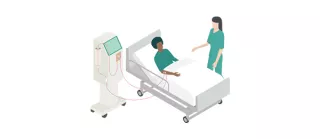
You may prefer to receive ICHD treatments at a hospital or dialysis clinic under the supervision of a clinical care team.
Kidney Transplant & Conservative Care
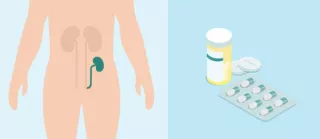
If you and your clinician decide dialysis isn’t right for you, there are other treatment options you may consider.
Talking to your doctor
Feeling empowered with knowledge and information can help you have a more productive partnership with your healthcare provider.